You stop breathing in your sleep. What happens now?
Obstructive sleep apnea is the repeated collapse of the upper airway during sleep. It is diagnosed with a sleep study, never with a questionnaire, and there are more treatments for it than most people are offered.
What obstructive sleep apnea is
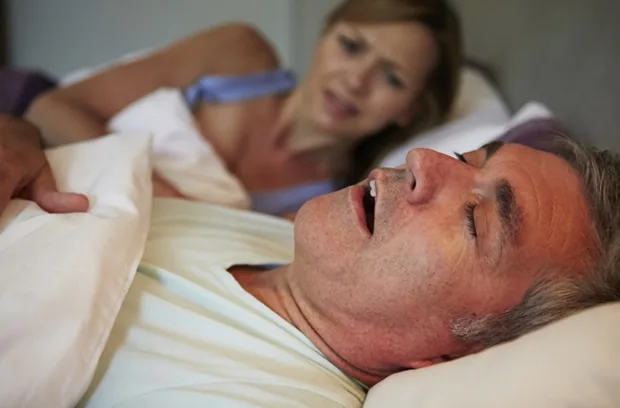
Obstructive sleep apnea is the repeated collapse of the upper airway during sleep. The airway narrows or closes, breathing pauses or becomes shallow, oxygen falls, and you surface briefly to reopen it. This can happen many times an hour, all night, and you will usually have no memory of any of it.
That last part is why it goes undiagnosed for years. The person who notices is almost always someone else.
The signs people miss
Most people here did not come because of snoring. They came because of something downstream that they had stopped connecting to their sleep.
- Waking two or three times a night and assuming it is your bladder.
- Falling asleep in a chair in the afternoon, reliably, every day.
- Morning headaches that clear by mid-morning.
- Being told you are irritable, and privately agreeing.
- Blood pressure that will not come down despite medication.
- A partner who has quietly moved to the spare room.
None of these proves anything on its own. Together they shape whether an assessment is the right next step.
How it is diagnosed
With a sleep study, and only with a sleep study. The AASM is explicit that questionnaires and prediction algorithms must not be used to diagnose sleep apnea without one. A score on a website is a reason to be evaluated, not an answer.
There are two kinds of study and which is appropriate is a clinical decision. A home test suits uncomplicated adults at increased risk of moderate to severe apnea. The laboratory is required where there is significant heart or lung disease, respiratory muscle weakness, hypoventilation, chronic opioid use, a history of stroke, or severe insomnia. The detail is on sleep testing.
What can be done about it
More than most people expect, and the first option offered is not the only one.
- Positive airway pressure. The most effective treatment, with a strong guideline recommendation for adults with apnea and daytime sleepiness. Most difficulty with it is a mask or settings problem rather than a verdict.
- Oral appliance therapy. A custom dental device, recommended for adults who cannot tolerate positive airway pressure or who prefer an alternative.
- Implanted upper airway stimulation. For a specific group who meet strict criteria, which differ between the FDA label and Medicare.
- Zepbound. The first medicine approved for sleep apnea, for adults with obesity, used alongside diet and activity rather than instead of positive airway pressure.
- Weight, position and alcohol. The conservative measures named in the guidelines, which sometimes do a great deal of the work.
If you have already tried CPAP and could not get on with it, you are not out of options and you are not unusual. See CPAP alternatives.
What happens here
A solo specialist practice. Dr. Qadoom takes the consultation, reviews your study, and sees you at every follow-up. For a condition whose treatment is adjusted over months rather than settled in a single visit, that continuity is the substantive difference.
Cost and referrals
What you pay depends on your plan and on what is ordered. The office checks your benefits before anything is scheduled and tells you what your plan is likely to require, including whether you need a referral. Published Medicare allowed amounts and the full explanation are on cost and insurance.
Not sure whether this is you?
You do not need a diagnosis, a referral in hand, or the right words for it. Describe what has been happening and we will tell you whether an assessment makes sense.
Call (614) 898-9340Sources
- Kapur VK et al. Clinical practice guideline for diagnostic testing for adult obstructive sleep apnea. J Clin Sleep Med 2017;13(3):479–504. https://europepmc.org/article/MED/28162150
- Patil SP et al. Treatment of adult obstructive sleep apnea with positive airway pressure: an AASM clinical practice guideline. J Clin Sleep Med 2019;15(2). https://doi.org/10.5664/jcsm.7640