The snoring has become a problem at home
Snoring can be a nuisance on its own, or it can be the audible part of obstructive sleep apnea. The two cannot be told apart by how the snoring sounds, which is why snoring without apnea is a diagnosis made by ruling apnea out.
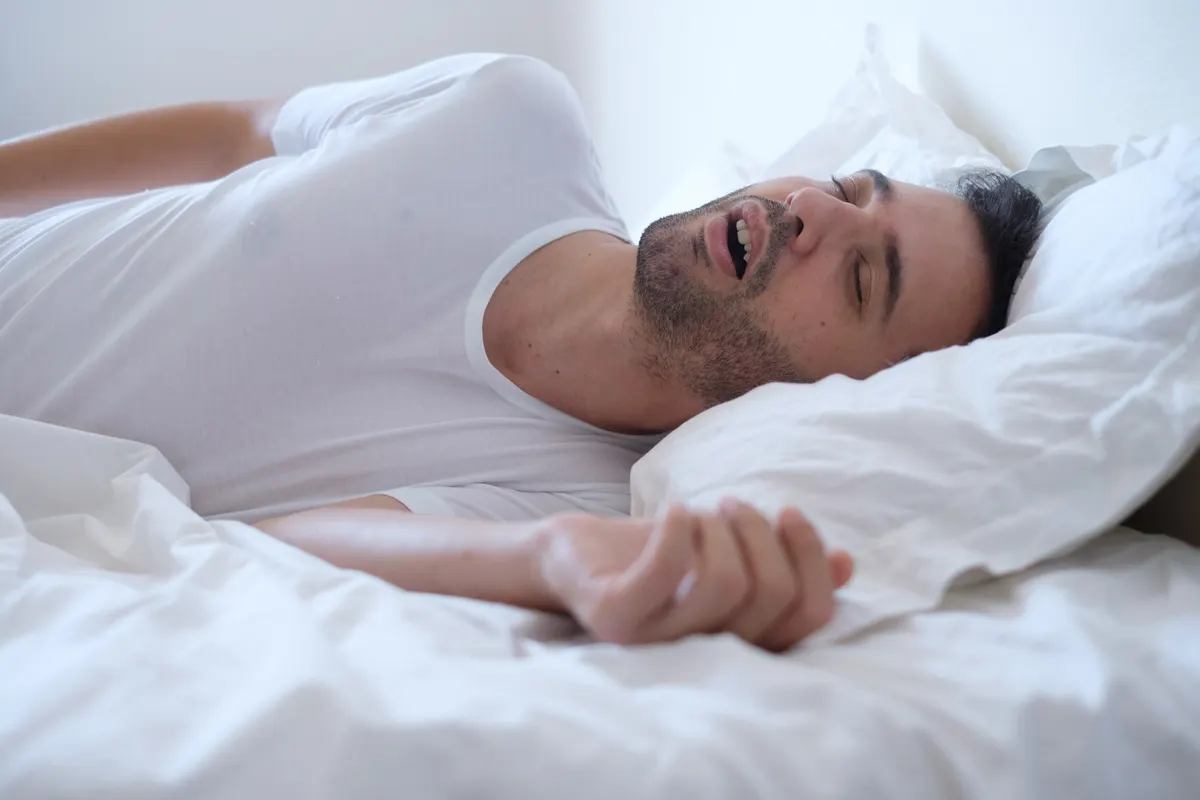
Snoring on its own is a diagnosis of exclusion
Primary snoring means snoring without obstructive sleep apnea. The important word is without: it is a diagnosis made by ruling apnea out, not by listening to the sound.
That distinction is the whole reason this page exists. Clinical symptoms cannot reliably separate primary snoring from obstructive sleep apnea. Loud snoring is common in apnea, and nobody having witnessed you stop breathing does not rule it out.
Definitions in the research literature are not even consistent with each other about where the line sits, which is a further reason not to self-diagnose from a website.
When snoring warrants a sleep study
Snoring together with daytime sleepiness, gasping or choking at night, high blood pressure, or obesity is an indication to test. Snoring for a long time, on its own, is not automatically one.
Where there is concern for obstructive sleep apnea after a proper sleep evaluation, in-lab polysomnography is the standard diagnostic test. A home sleep apnea test is an option for uncomplicated adults judged to be at increased risk of moderate-to-severe apnea. Both are ordered by a physician; neither is a retail product you buy for yourself.
One limitation worth knowing before you take a home test: it can underestimate severity compared with an in-lab study. A negative or technically inadequate home test in someone who still has symptoms does not mean “you only snore”.
The drugstore aisle, and what the evidence says about it
Most people arrive having already spent money on this. Here is what the published evidence shows, rather than what the packaging says.
- Nasal dilator strips and internal nasal stents. A systematic review and meta-analysis of 17 studies covering 496 people found no significant difference against control in apnea-hypopnea index, snoring index, sleep architecture, oxygen saturation or nasal resistance. The authors could not recommend them as a standalone treatment for sleep-disordered breathing. They may have a role alongside other treatment where nasal congestion is the issue.
- Snore sprays, nasal strips and positioning pillows. A randomised home trial of 40 people, using acoustic analysis as well as questionnaires, found no objective or subjective benefit against using no aid at all.
- Boil-and-bite mouthguards sold for snoring. The guideline path is a custom, titratable appliance fitted by a dentist. A cheaper device that quietens the sound can leave untreated apnea hidden behind it.
- Chin straps. Not a recommended treatment for apnea or snoring.
What does have evidence behind it
Once apnea has been excluded or treated, a custom oral appliance is the treatment with guideline support for snoring, carrying a standard-level recommendation against no treatment in the 2015 AASM and American Academy of Dental Sleep Medicine guideline. It reduces the intensity and frequency of snoring and can improve sleep quality and a bed partner’s quality of life.
The conservative measures named in the same guideline are weight loss, positional therapy, and avoiding alcohol.
If the snoring turns out to be part of obstructive sleep apnea, positive airway pressure treats the snoring by treating the apnea. It is not a snoring gadget.
What happens here
Diagnosis first, options second. That order is not a formality: choosing a treatment for the noise before establishing whether there is apnea underneath it is how untreated apnea gets missed for years.
Been sent here by the person you share a bed with?
That is how a lot of these calls start, and it is a perfectly good reason to be seen. The evaluation is the same either way.
Call (614) 898-9340Sources
- Primary snoring definitions and the limits of clinical diagnosis, CADTH review. https://pmc.ncbi.nlm.nih.gov/articles/PMC3411139/
- AASM position statement on home sleep apnea testing. https://aasm.org/aasm-releases-position-statement-home-sleep-apnea-testing/
- Systematic review and meta-analysis of nasal dilators in sleep-disordered breathing (17 studies, 496 participants). https://pubmed.ncbi.nlm.nih.gov/41487318/
- Michaelson PG, O’Connor P. Randomised trial of over-the-counter snoring aids. Otolaryngology–Head and Neck Surgery 2004;130:649–658. https://doi.org/10.1016/j.otohns.2003.11.008